The Cancer-Linked Bread Additive Hiding in Your Cafeteria, and the States Racing to Ban It
- Aanya Singh
- Jun 10
- 3 min read

The fluffy white roll sitting next to your cafeteria pizza has been made roughly the same way since 1941. One of the ingredients that can give it that tall, airy rise is potassium bromate, a chemical the World Health Organization's cancer research arm lists as a possible human carcinogen. You won't see it on the lunch menu, and you usually won't find it on a label either.
Bromate has been banned in the European Union since 1990, in Canada since 1994, and in dozens of countries since. The United States never followed. Now individual states are taking matters into their own hands, and school cafeterias are right in the middle of the fight. Here's what bromate is, why so much of the world walked away from it, and what students can actually do about it.
What Potassium Bromate Actually Does
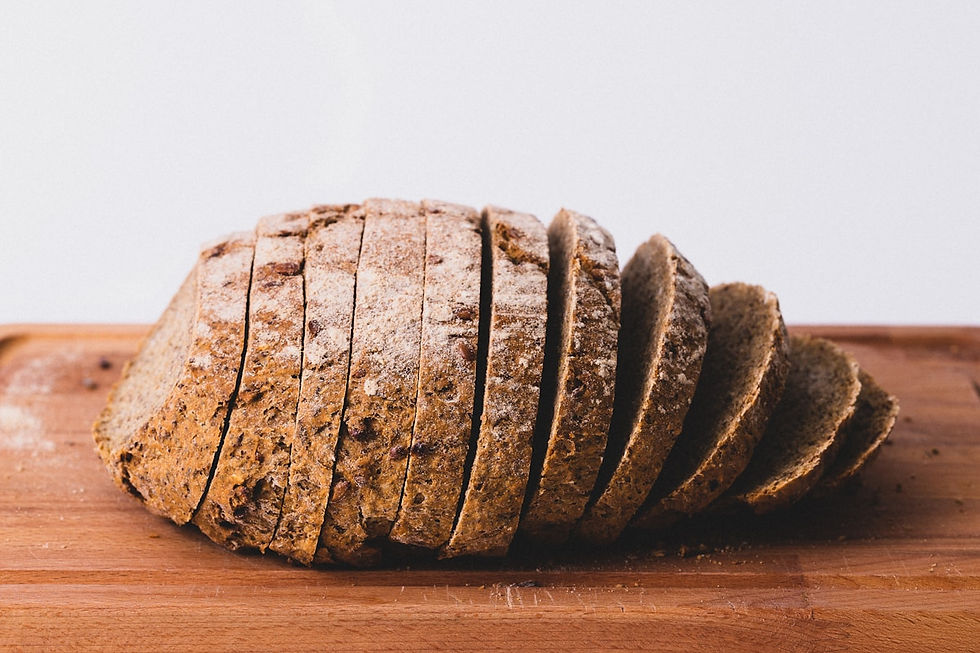
Potassium bromate, sometimes written as KBrO3 on an ingredient list, is a dough conditioner, also called a flour improver. Bakers add a tiny amount to flour and it reacts during mixing and baking, strengthening the dough so loaves rise higher, hold their shape, and come out with a whiter crumb and a springier bite. For a commercial bakery making thousands of buns, rolls, and pizza crusts a day, that kind of consistency is the entire selling point.
The idea is that bromate fully converts into a harmless compound called bromide when bread is baked long enough and hot enough. The problem is that "enough" is hard to guarantee. Under-baking, thicker products, or simply using too much bromate can leave residual bromate behind in the finished bread, which is the exact compound regulators worry about.
Why Most of the World Said No
The International Agency for Research on Cancer classifies potassium bromate as a Group 2B substance, meaning possibly carcinogenic to humans. That label comes from animal studies linking it to tumors of the kidney, thyroid, and other organs, and the evidence is decades old at this point.
The European Union and United Kingdom banned it in 1990. Canada followed in 1994. Brazil, China, Peru, and Nigeria added their own bans as the science piled up, and India joined in 2016 after advocacy groups tested store-bought bread and found bromate residue in multiple popular brands. The U.S. still allows it under federal rule 21 CFR 136, where it has been grandfathered in since 1941.

What This Has to Do With School Lunch
Bread is everywhere in a school cafeteria. Hamburger buns, dinner rolls, pizza crust, sandwich bread, breadsticks, the soft pretzel at the snack line. A lot of it comes from large commercial bakeries that supply districts on contract, and those high-volume products are exactly where bromate has historically been used to keep texture consistent at scale.
Most major brands dropped bromate voluntarily years ago under public pressure, so not every roll contains it. But "most" is not "all," and because schools rarely publish the full ingredient lists from their bread suppliers, families usually have no easy way to know. That gap between what is technically legal and what anyone can actually verify is the real problem.
The States Aren't Waiting for the FDA
In October 2023, California passed AB 418, the California Food Safety Act, the first state law in the country to ban specific additives outright. Starting January 1, 2027, it bars four ingredients from any food made, sold, or distributed in the state: potassium bromate, brominated vegetable oil, propylparaben, and Red Dye No. 3. Manufacturers got three years to reformulate roughly 12,000 products.
Other states moved fast. Illinois introduced SB 93 targeting bromate and propylparaben, with talk of adding titanium dioxide. New York proposed banning seven additives at once, bromate included. And Arizona aimed straight at schools with HB 2164, which prohibits cafeterias from serving "ultra-processed" foods defined by a list of additives that names potassium bromate first. In a single recent session, at least 30 states weighed bills limiting additives or dyes. The FDA has since said it is reviewing bromate, propylparaben, and Red 3, but the states got there first.

What You Can Do About It
You don't need a chemistry degree to act on this. Start by reading labels wherever you can. Look for "potassium bromate," "bromated flour," or "KBrO3" on any packaged bread or buns sold at your school. If you spot it, that is your evidence, in writing, from the source.
Then bring it to the people who pick your district's suppliers. Ask your food service director one clear question in writing: do any of our bread products contain potassium bromate, and can we switch to unbromated suppliers? Unbromated flour is widely available and already standard for most national brands, so this is an ask schools can realistically say yes to. Students have already moved statehouses on food dyes, and bread is the next obvious target. If you want help drafting that letter or connecting with others in your state doing the same work, join us at cleanlunchcoalition.org/join-us.


Comments